
6-7 May 2027
HITEX Exhibition Centre, Hyderabad
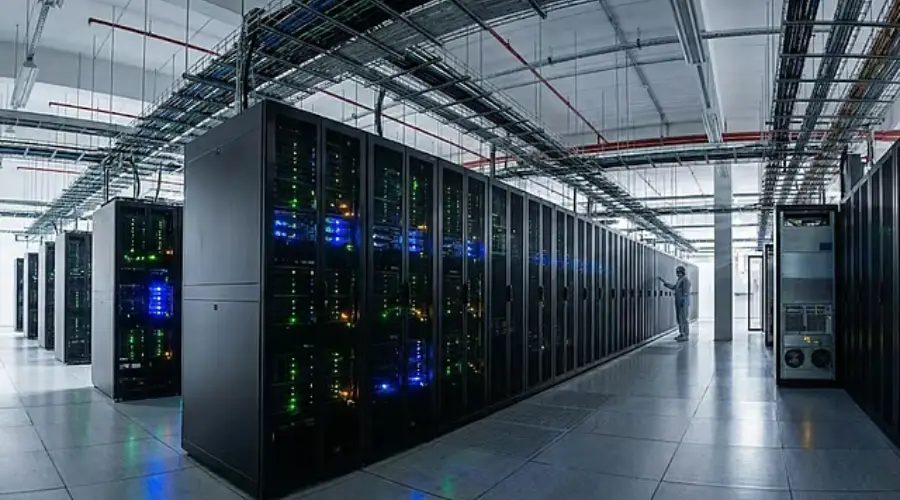
India’s expanding digital economy is creating a new demand for reliable power, efficient cooling, smarter infrastructure and sustainable resource management.
India’s data-centre industry is entering a period of significant expansion. The growing use of cloud computing, artificial intelligence, 5G and data-driven applications is increasing the need for facilities that can store and process ever-growing volumes of digital information.
This growth is reflected in the country’s rapidly increasing data-centre capacity. According to the Policy Consensus Centre (PCC), India’s operational capacity increased from approximately 375 MW in 2020 to more than 1,575 MW in 2025. The sector could potentially reach 4.5-9 GW by 2030, indicating that the supporting infrastructure around these facilities will need to scale at a similar pace.
Building the infrastructure behind digital growth
A data centre depends on much more than computing equipment. Continuous operations require dependable electricity, sophisticated cooling, backup systems, monitoring and other critical infrastructure.
Power availability is therefore becoming a strategic consideration for future developments. PCC estimates that electricity demand from India’s data centres could rise from around 1.4 GW in 2024 to 9 GW by 2030. This makes energy efficiency, renewable power integration, grid planning and reliable backup systems increasingly important for operators.
Cooling is another area receiving greater attention. High-performance computing generates substantial heat, requiring carefully designed systems to maintain equipment reliability. Depending on the technology used, cooling can also create significant water requirements. PCC estimates that data centres consumed approximately 150 billion litres of water during 2024-25, highlighting the importance of efficient cooling systems and responsible water management as capacity expands.
Planning for long-term growth
As data-centre facilities become a larger part of India’s urban and industrial landscape, their development also needs to consider the infrastructure and communities around them. Land availability, power supply, water resources, noise management and environmental performance are increasingly relevant to site selection and facility planning.
The PCC discussion paper highlights the need for more consistent reporting and clearer standards around resource consumption and operational impact. Such measures could help developers, operators and local authorities make better-informed decisions as the sector grows.
At the same time, this expansion is creating opportunities across the wider industrial technology ecosystem. Electrical systems, HVAC and cooling, automation, material handling, fire and safety, energy management, monitoring and facility management technologies can all contribute to more efficient data-centre operations.
India’s data-centre opportunity is therefore not simply about adding more computing capacity. It is about creating the power, cooling, water, automation and industrial infrastructure required to support that capacity efficiently and sustainably. As digital demand continues to rise, smarter planning and resource-efficient technologies will be essential to building an infrastructure ecosystem capable of supporting India’s next phase of digital growth.
Source: Policy Consensus Centre (PCC), Living Next to the Cloud: An Evidence-Based Approach to Data Centres in Residential India, as reported by Fortune India, October 1, 2026.